Back to the Office, Back to Reality
My best hours are the quiet ones before the house wakes up. But today, the quiet didn't last. From a shattered wine bottle at my doorstep to an impromptu "social hour" in a Bnei Brak bomb shelter, my first day back at the office after a month away was a sharp reminder of our surreal new reality.
Published by
My best hours are the ones most people sleep through. I woke up early today, while the house was still and my mind was clear, just to write. There is a specific kind of peace in those hours - a chance to process everything before the "real world" demands my attention.
By 7:00 AM, the writing was done. I got dressed and headed to the neighborhood supermarket. We’re hosting the Seder this year - my sister and her family, plus my wife’s parents - and I knew if I didn’t beat the rush, I’d be standing in holiday lines for hours.
I made it through the store in record time, mission accomplished. But as I was lugging the bags home, disaster struck right at the entrance of my building. A bottle of wine slipped and shattered. The smell of red wine hit the pavement instantly - a messy, loud reminder that the day was officially starting. I cleaned up, hauled the rest of the groceries upstairs, and finally started the drive to the office.
It had been more than a month since I’d been there. After returning from Thailand, I’d been working from home because of the war.
The commute felt hollow. The roads weren't just "holiday quiet" - they had that lingering emptiness that comes with wartime. I was mid-drive when the siren cut through the air. You don’t panic; you just switch into a different kind of focus.
I pulled onto a sidewalk near an old building in Bnei Brak and followed the crowd toward an entrance. No one asked who I was. In Israel, when the alarms go off, there are no strangers. We all share the same minute of reality.
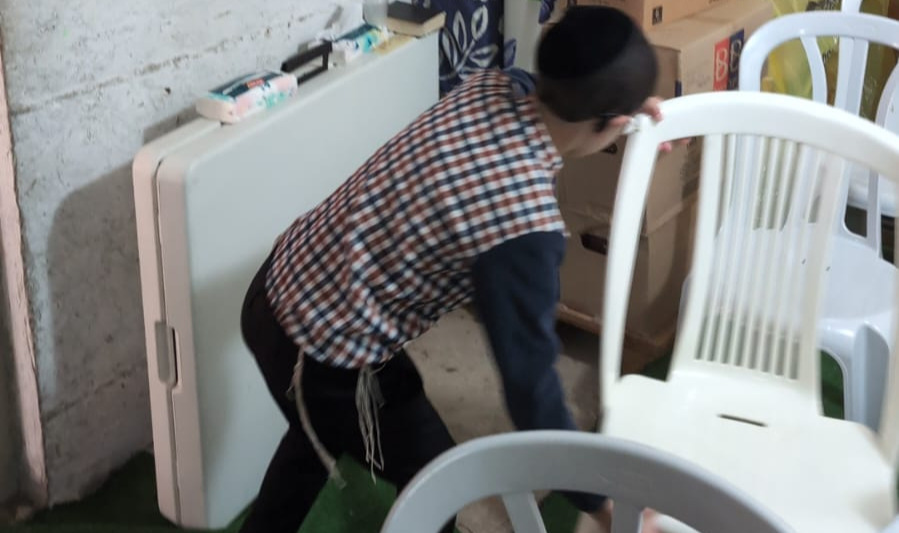
Inside the shelter, a neighbor mentioned it was "Kosher for Pesach." In Bnei Brak, that isn’t a joke; it’s a point of fact. The room had been meticulously cleared of chametz so people could seek safety without compromising the holiday. I looked at the heavy steel door - there was a picture of the Lubavitcher Rebbe with a small prayer for protection taped below it.

Then, just like that, it was over. Everyone filtered back out, the street found its rhythm, and I finished the drive to work.
The office was a ghost town. Between the war and the holiday eve, there were more empty desks than people. I was catching up with a few colleagues I hadn’t seen in ages when the siren started again. No one even blinked. We just kept talking about my trip to Thailand while we stood up and walked toward the office safe room.
It turned into an impromptu social hour. Because everyone was forced into the same room, I ended up seeing people I hadn't managed to catch earlier. We stood there, safely tucked away, trading stories until the "all clear" came.
I ended up leaving early; there’s a specific kind of loneliness in an empty office during wartime that I wasn't in the mood to experience. The drive home was spent "mapping" - checking the highway shoulders and calculating exactly where I’d need to stop if the sirens cut through the radio again.


Discussion
Reader comments
0 approved